














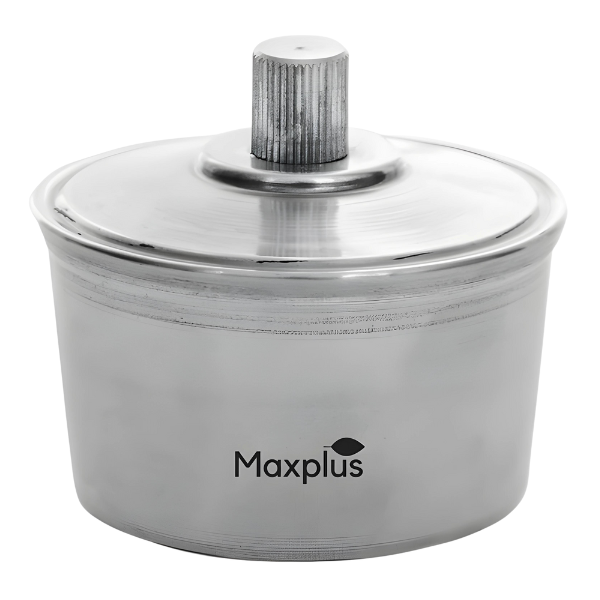
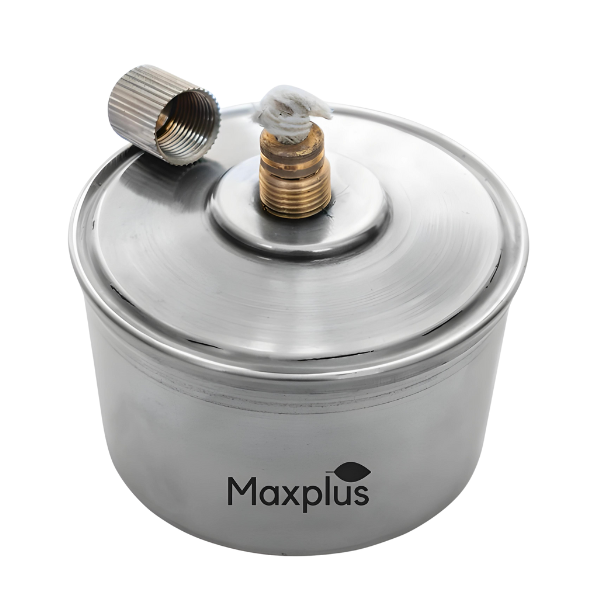



An alcohol burner or spirit lamp is a piece of laboratory equipment used to produce an open flame. Alcohol burners are preferred for some uses over Bunsen burners for safety purposes, and in laboratories where natural gas is not available. The flame is generally limited to approximately 5 centimeters (two inches) in height, with a comparatively lower temperature than the gas flame of the Bunsen burner. While these do not produce flames as hot as other types of burners, they are sufficiently hot for performing some chemistries, and standard microbiology laboratory procedures, and can be used for flame sterilization of other laboratory equipment.
Dimensions:
| Inlet Diameter |
|
| Height |
|
| Base Diameter |
|
| Weight |
|
A spirit lamp is a small, portable, and simple type of burner commonly used in laboratories for heating small volumes of liquids or for performing simple chemical reactions. It consists of a stainless steel container, usually with a screw cap, that holds a small amount of liquid fuel such as ethanol or methanol.
The fuel is ignited using a wick or by direct application of a flame. The stainless steel construction allows the lamp to withstand high temperatures and resist corrosion from the fuel. Spirit lamps are often used for heating small test tubes, performing flame tests, and for simple chemistry experiments.
They are also commonly used in medical settings for heating surgical instruments and for sterilizing small equipment. Due to their small size and simplicity, spirit lamps are a convenient and cost-effective alternative to larger and more complex burners like the Bunsen burner.


Reviews
Clear filtersThere are no reviews yet.