












L298 Motor Driver Module

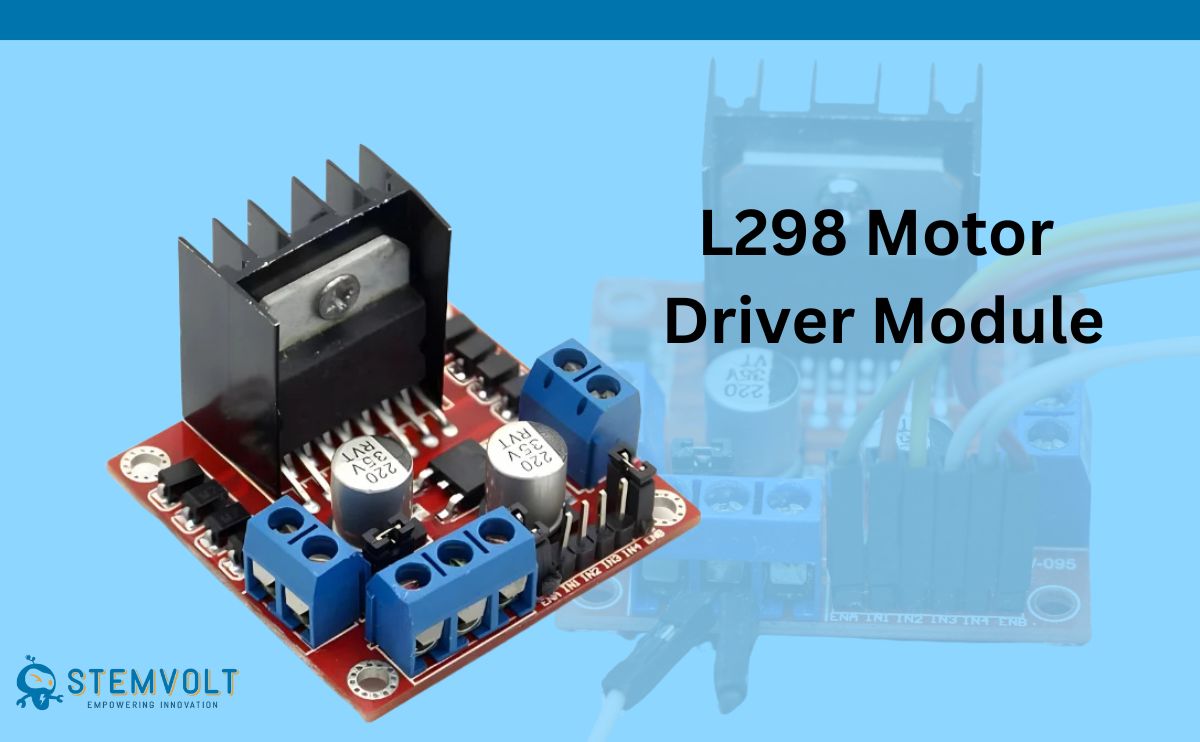
L298 Motor Driver Module
In electronics and robotics projects, controlling motors efficiently is one of the most important tasks. Whether you’re building a line-following robot, automated vehicle, or IoT-based automation system, you cannot directly connect motors to microcontrollers. This is where a motor driver plays a crucial role. The L298 Motor Driver Module is one of the most commonly used DC motor driver solutions for beginners and engineers alike.
A motor driver acts as an interface between low-power control signals and high-power motors. It allows microcontrollers like Arduino, ESP32, or Raspberry Pi to control direction, speed, and movement of motors safely. The L298 module is especially popular in robotics learning because it is easy to use, affordable, and versatile.
In this article, we’ll explore what is motor driver, how the L298 works, motor driver types, and where this module is used in real-world electronics projects. This guide is useful for students, hobbyists, and engineers looking to select the right motor driver IC for their applications.
What is a Motor Driver?
A motor driver is an electronic circuit or module used to control motors. Since microcontrollers operate at low voltage and current, they cannot directly power motors. The motor driver acts as a power amplifier, taking control signals from a microcontroller and driving the motor using an external power supply.
Key functions of a motor driver include:
- Controlling motor direction (forward/reverse)
- Controlling speed using PWM signals
- Providing current amplification
- Protecting microcontroller circuits
- Supporting multiple motors
The L298 module is a dual H-bridge motor driver circuit capable of controlling two DC motors or one stepper motor simultaneously.
Types of Motor Drivers
There are several types of motor driver modules available depending on motor type and project requirement. Understanding these helps in selecting the right motor driver board.
1. DC Motor Drivers
Used to control simple brushed DC motors. Examples:
- L298 Motor Driver
- L293D Motor Driver
- BTS7960 Motor Driver
2. Stepper Motor Drivers
Designed for precise angular control.
- A4988 Stepper Driver
- DRV8825 Driver
3. Servo Motor Drivers
Used when controlling multiple servo motors in robotics arms.
4. Multi-channel Motor Drivers
These include 4 channel motor driver modules used for robots with multiple wheels.
5. High Current Motor Drivers
Used for heavy motors like industrial automation systems.
The L298 belongs to the DC motor driver category and is widely used in beginner robotics.
How L298 Motor Driver Module Works
The L298 module is based on the L298 motor driver IC, which contains two H-bridge circuits. Each H-bridge allows control of motor direction.
Working Principle
The module works by switching polarity across the motor terminals:
- IN1 HIGH + IN2 LOW → Motor rotates forward
- IN1 LOW + IN2 HIGH → Motor rotates reverse
- Both LOW → Motor stops
- PWM signal → Speed control
The enable pins (ENA and ENB) are used for speed control using PWM from microcontroller.
Main Pins on L298 Module
- IN1, IN2 → Motor A direction control
- IN3, IN4 → Motor B direction control
- ENA, ENB → Speed control
- 12V → Motor power supply
- 5V → Logic power
- GND → Common ground
This simple motor driver circuit makes it ideal for beginners learning robotics.
Key Components Used in L298 Motor Driver Module
The L298 module includes several important electronics components:
- L298 Motor Driver IC
- Heat sink for thermal management
- Flyback protection diodes
- Voltage regulator
- Screw terminals
- Enable jumpers
- H-Bridge circuit
These components ensure safe motor operation and reliable performance in robotics projects.
Technical Explanation for Engineers
From an engineering perspective, the L298 motor driver works as a dual full-bridge driver. It allows independent control of two DC motors using logic-level input signals.
Typical setup includes:
- Microcontroller (Arduino, ESP32)
- Motor driver module (L298)
- External power supply
- DC motors
- PWM control pins
- Logic resistors
- Protection diodes
- Sensors (optional)
For example, in a robot:
- IR sensors detect path
- Microcontroller processes input
- PWM signal sent to motor driver
- L298 amplifies current
- Motors rotate accordingly
This setup ensures isolation between control and power circuits.
Benefits of Using L298 Motor Driver
The L298 motor driver offers several advantages:
- Easy to interface with Arduino
- Controls two motors simultaneously
- Built-in heat sink
- Supports PWM speed control
- Affordable and beginner friendly
- Suitable for robotics learning
- Wide operating voltage range
- Available as ready-to-use motor driver board
Because of these benefits, it remains one of the most widely used motor driver types in education.
Practical Use Cases
The L298 motor driver module is commonly used in:
Robotics Projects
- Line follower robot
- Obstacle avoiding robot
- Bluetooth controlled robot
- WiFi controlled robot
IoT Experiments
- Smart door automation
- Motorized curtain control
- Smart agriculture systems
STEM Learning
- School robotics kits
- Engineering lab experiments
- DIY electronics learning
Automation Systems
- Conveyor belt control
- Mini robotic arms
- Smart vehicles
These applications demonstrate the importance of selecting the right motor driver use.
Internal Linking Section
If you’re building robotics or automation projects, you may also need compatible motor driver accessories and modules.
Check out:
- L Clamp for Center Shaft Gear Motor
- A4988 Stepper Motor Driver Module
- L293D 4 Channel DC Motor Driver
- CCM5D Digital PWM DC Motor Speed Controller with LED Display
Explore more motor driver options here:
https://stemvolt.in/product-category/motors-and-motor-drivers/motor-drivers-and-regulators/
For motors and cooling solutions, visit:
https://stemvolt.in/product-category/motors-and-motor-drivers/pumps-and-fans/
These components help build complete motor control systems.
Beginner Tips for Using L298 Motor Driver
Here are some practical tips for students and beginners:
- Always use an external power supply for motors
- Connect common ground between Arduino and driver
- Remove enable jumpers when using PWM control
- Use heat sink for high current motors
- Avoid exceeding voltage ratings
- Test with small motors before final project
Following these steps ensures safe and reliable operation.
Conclusion
The L298 Motor Driver Module is one of the most versatile and beginner-friendly motor driver solutions available today. It provides a simple way to control DC motors using microcontrollers, making it ideal for robotics, automation, and STEM learning. Understanding what is motor driver, how it works, and the types of motor driver available helps students select the right module for their projects.
With dual H-bridge architecture, PWM speed control, and easy interfacing, the L298 continues to be a popular DC motor driver in educational and practical applications. Whether you’re building your first robot or working on advanced automation, this motor driver IC offers a reliable and affordable solution.
For high-quality motor drivers and robotics components, StemVolt provides a wide range of modules suitable for beginners and engineers across India.