












Best Electronic Modules for Arduino: Complete Guide for Beginners & Projects (2026)

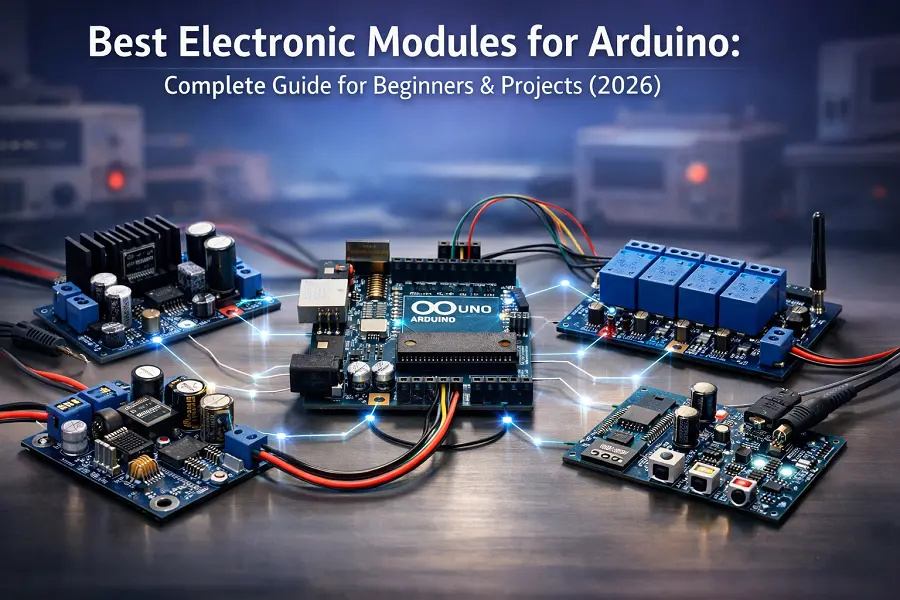
If you’re starting your journey in electronics or Arduino-based projects, choosing the right modules can make a huge difference. From controlling high-voltage appliances to building wireless audio systems, modules simplify complex circuits into plug-and-play solutions.
Among the most commonly used components are the audio amplifier module, relay board, 12v charging module, and bluetooth audio board. These modules are widely used in robotics, IoT systems, DIY speakers, and automation projects.
For students and hobbyists in India, understanding how these modules work is not just helpful—it’s essential for building reliable and scalable projects. Whether you’re working on a college project or experimenting at home, this guide will help you understand the best electronic modules for Arduino and how to use them effectively.
What Are Electronic Modules for Arduino?
Electronic modules are pre-designed circuit boards that combine multiple components into a single functional unit. Instead of designing circuits from scratch, you can directly connect these modules to an Arduino or any microcontroller.
For example:
- An audio board amplifier lets you amplify sound signals without designing amplifier circuits
- A relay module allows Arduino to control AC appliances safely
- A 12v battery charger module helps in efficient power management
These modules reduce complexity, save time, and improve project reliability—especially for beginners.
Understanding Audio Amplifier Modules
An audio amplifier module is used to increase the strength of audio signals so they can drive speakers effectively. Arduino boards alone cannot output enough power for speakers, which is why these modules are essential.
How It Works
The module takes a low-power audio signal (from Arduino, mobile, or Bluetooth receiver) and amplifies it using built-in amplifier ICs like LM386 or TPA3116.
Key Features
- Compact design
- Low power consumption
- Supports 3.5mm or AUX input
- Compatible with speakers (4Ω, 8Ω)
Where It Is Used
- DIY Bluetooth speakers
- Voice alert systems
- Smart home audio notifications
Relay Boards and Their Importance
A relay board is one of the most important modules when working with automation. It allows low-voltage systems like Arduino (5V) to control high-voltage devices like fans, bulbs, and motors.
Types of Relay Modules
- Single-channel relay module
- Multi-channel relay boards
- 3v relay module (for low-power systems)
How It Works
The Arduino sends a signal to the relay, which acts as a switch to turn devices ON or OFF.
Practical Applications
- Home automation systems
- Industrial control panels
- Smart irrigation systems
Power and Charging Modules (12V Systems)
Power management is often ignored by beginners, but it’s critical for stable operation. A 12v charging module or 12v battery charger ensures your system runs safely and efficiently.
Why You Need It
- Prevents overcharging
- Provides stable voltage
- Protects batteries and circuits
Common Use Cases
- Robotics power supply
- Solar charging systems
- Portable electronics
Explore charging modules:
https://stemvolt.in/product-category/electronics-modules/power-charging-modules/
Bluetooth Audio Boards for Wireless Projects
A bluetooth audio board enables wireless audio transmission, making it ideal for modern DIY projects.
Features
- Wireless connectivity (Bluetooth 3.0/5.0)
- Stereo output
- Easy integration with amplifier modules
How It Works
It receives audio signals from a mobile or laptop and outputs them to an amplifier or speaker.
Example Projects
- Bluetooth speaker systems
- Car audio upgrades
- Wireless music streaming setups
Technical Explanation: How These Modules Work Together
In a typical Arduino-based system, multiple modules work together to perform a complete function.
Core Components Involved
- Microcontroller (Arduino UNO/Nano) – controls logic
- Sensors – provide input (temperature, motion, etc.)
- Relay module – controls external devices
- Audio amplifier module – outputs sound
- Bluetooth audio board – enables wireless communication
- Resistors & capacitors – ensure stable circuit operation
Example Flow
- Sensor detects input
- Arduino processes data
- Relay triggers a device
- Audio module plays alert sound
This integration is what makes Arduino powerful for real-world applications.
Practical Use Cases in Real Projects
1. Smart Home Automation
Use a relay board to control lights and appliances while adding audio alerts using an audio amplifier module.
2. DIY Bluetooth Speaker
Combine a bluetooth audio board with an amplifier and speakers to build a portable sound system.
3. Robotics Projects
Use a 12v battery charger module to power motors and control them using Arduino.
4. IoT-Based Alert Systems
Trigger voice alerts using amplifier modules when sensors detect anomalies.
5. College Engineering Projects
These modules simplify circuit design, making them ideal for lab experiments and final-year projects.
Useful Products and Modules
If you’re building projects, these components are a great starting point:
- Check out: https://stemvolt.in/product/220v-ac-to-12v-dc-converter-power-supply-board/
- Check out: https://stemvolt.in/product/1-channel-5v-relay-module-without-optocoupler/
- Check out: https://stemvolt.in/product/bluetooth-3-0-audio-receiver-module-with-stereo-output/
These modules are widely used and beginner-friendly.
Beginner Tips for Working with Modules
- Always check voltage ratings
Never connect a 12V module directly to a 5V Arduino pin. - Use proper power supply
Unstable power can damage your modules. - Start with simple projects
Begin with LED + relay before moving to complex systems. - Read datasheets
Understanding specifications helps avoid mistakes. - Use breadboards for testing
Avoid soldering until your circuit works perfectly. - Ensure proper grounding
Common ground is essential when connecting multiple modules.
Read Also :- Arduino vs ESP32: Which Board is Better for Your Projects in 2026?
Conclusion
Electronic modules have made Arduino development faster, easier, and more accessible—especially for students and hobbyists in India. Whether it’s an audio amplifier module for sound output, a relay module for automation, or a bluetooth audio board for wireless connectivity, each module plays a crucial role in modern electronics projects.
By understanding how these components work and how to integrate them, you can build smarter, more efficient systems—from simple DIY setups to advanced IoT solutions.
If you’re just starting out, focus on learning one module at a time, experiment with real circuits, and gradually combine them into complete projects. With the right approach and tools from StemVolt, your electronics journey can become both practical and exciting.