














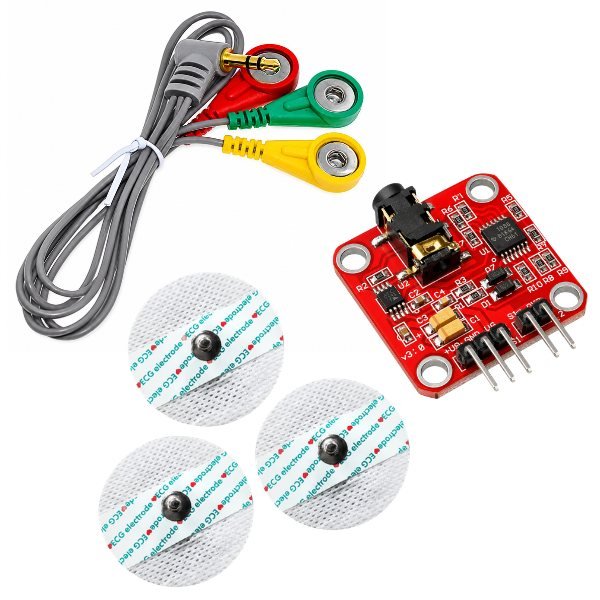
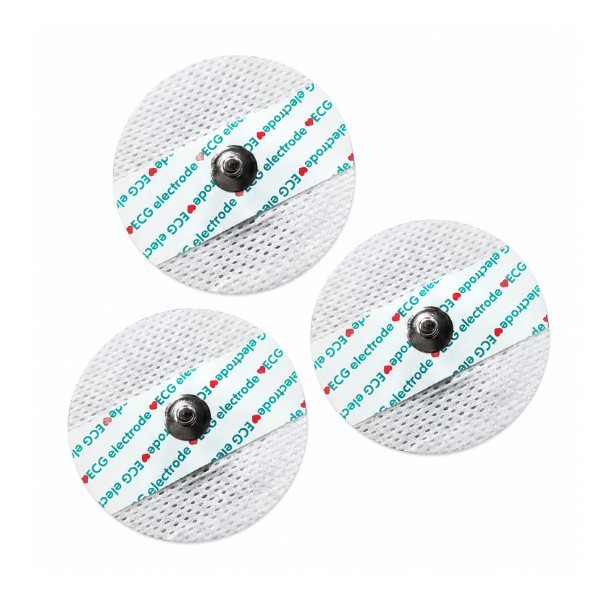
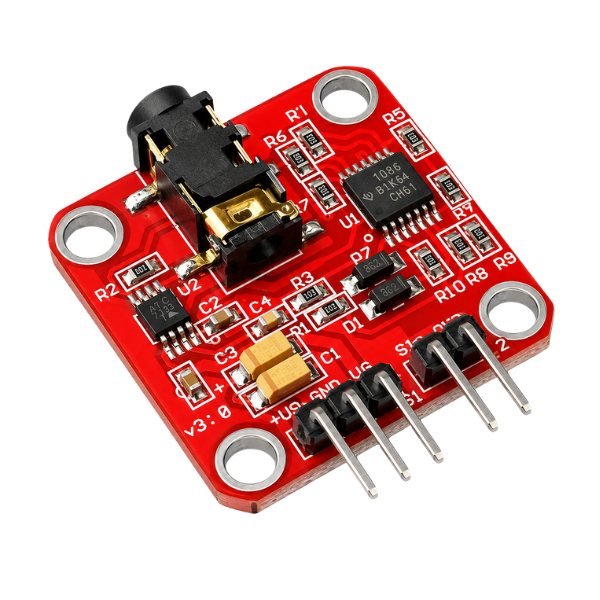
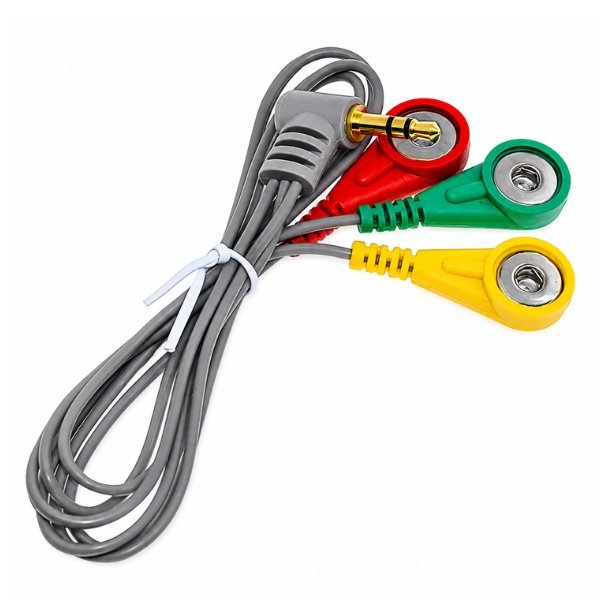
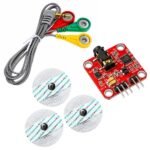
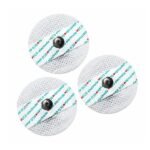
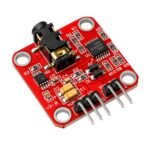
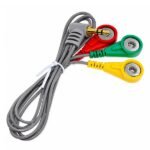



The EMG Muscle Sensor V3.0 With Electrodes And Cable is an electromyography sensor module that detects and amplifies the electrical signals generated by skeletal muscle fibres during contraction, converting raw bio-electric muscle activity into an analog voltage output readable by Arduino, STM32, and other ADC-capable microcontrollers. The emg muscle sensor operates from 3.3V to 5V DC, connects to 52mm diameter snap-type gel electrode pads through a 1-metre cable with a 3.5mm audio jack connector, and delivers an analog output signal proportional to muscle activation intensity.
Emg sensor module datasheet, the EMG Sensor V3.0 contains instrumentation amplifier, filtering, and rectification stages that process the raw microvolt-level muscle signal into a stable 0V to VCC analog output readable without any external signal conditioning. The emg sensor module v3 0 requires three electrode placements — two signal electrodes placed over the target muscle belly and one reference electrode placed over a bony landmark away from muscle tissue. The electrode placement accuracy has more impact on signal quality than any software setting placement is the primary reason for weak or noisy EMG readings in Indian college biomedical project builds. One practical trade-off: the 52mm electrode pads are single-use consumable items — each session requires fresh electrode pads for reliable signal quality, as used pads dry out and increase skin-electrode contact impedance significantly.
The non-obvious advantage of the 3.5mm audio jack electrode interface on this emg muscle sensor v3 is rapid connection and disconnection — the standard audio jack allows electrode cables to be swapped between different muscle sites quickly during multi-muscle monitoring sessions without soldering or terminal connections. The emg sensor module v3 0 connects to any analog input pin on Arduino, STM32, or Raspberry Pi through standard headers. Engineering students building gesture-controlled projects use it.
Related Product:
- Checkout the Heartbeat Pulse Sensor Module
Features:
- Instrumentation amplifier filters and rectifies raw microvolt EMG signals
- Analog 0V to VCC output directly readable by Arduino ADC pins
- 52mm snap electrode pads provide consistent skin contact for signal quality
- 3.5mm audio jack enables rapid electrode cable swap between muscle sites
- 3.3V to 5V supply compatible with Arduino ESP32 and STM32 boards
Technical specifications:
| Specification | Details |
|---|---|
| Model | EMG Muscle Sensor V3.0 |
| Input Voltage | 3.3 V – 5 V DC |
| Cable Length | 1 Meter |
| Electrode Pad Diameter | 52 mm |
| Audio Jack | 3.5 mm Jack |
| Operating Application | Muscle Signal Detection |
Applications:
- EMG Muscle Sensor V3.0 used for gesture-controlled robotic hand build
- Biomedical project uses emg muscle sensor for muscle fatigue study
- Prosthetic arm uses emg sensor module for grip signal detection control
- Bio device uses emg sensor module v3 0 for muscle training session
- Research project uses emg sensor module for real-time muscle activity logging
Package includes:
- 1 x EMG Muscle Sensor V3.0

Ankur Asawa –
First order satisfied
Amit jain –
Reliable signal output and easy microcontroller integration make this EMG sensor a great choice for educational and research applications.
Rohit Goyal –
Secure packaging received
Siddhesh Lad –
Perfect for ATL lab and STEM projects, with included electrodes and cable making setup quick and convenient
Nikhil Dubey –
On time delivery
Dilip Maheshwari –
Fully satisfied with quality
Sachin Yadav –
EMG muscle sensor V3.0 accurately detects muscle activity signals and is ideal for biomedical, robotics, and human-machine interface projects