













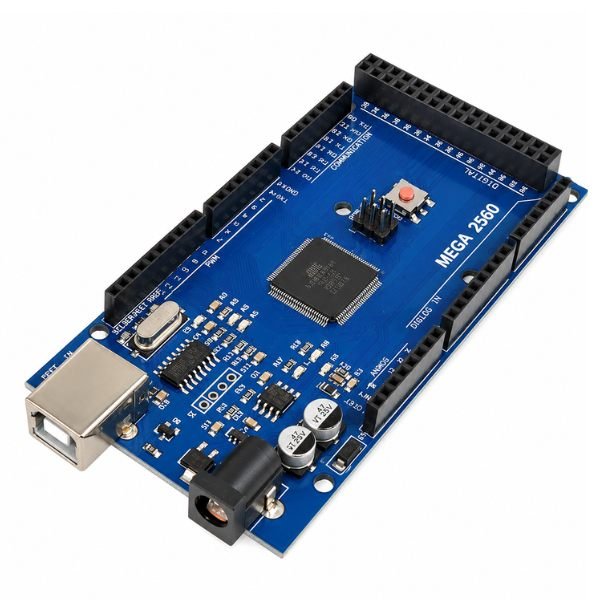
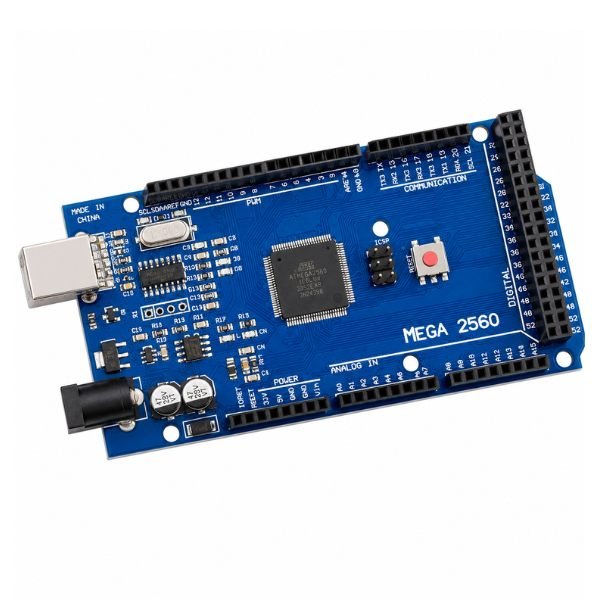
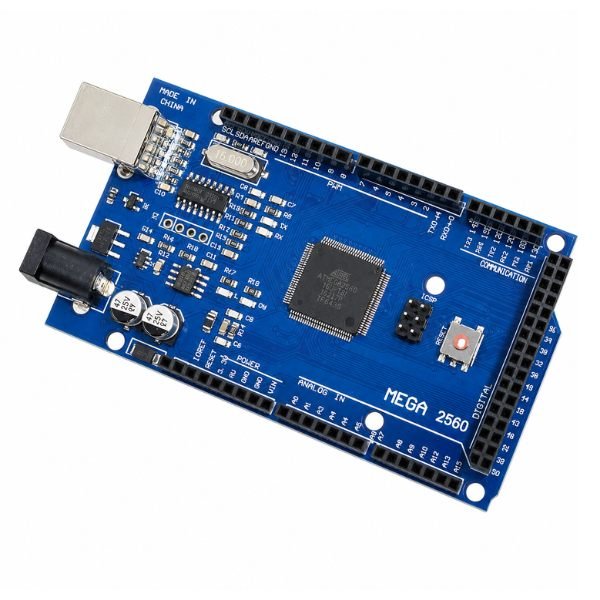
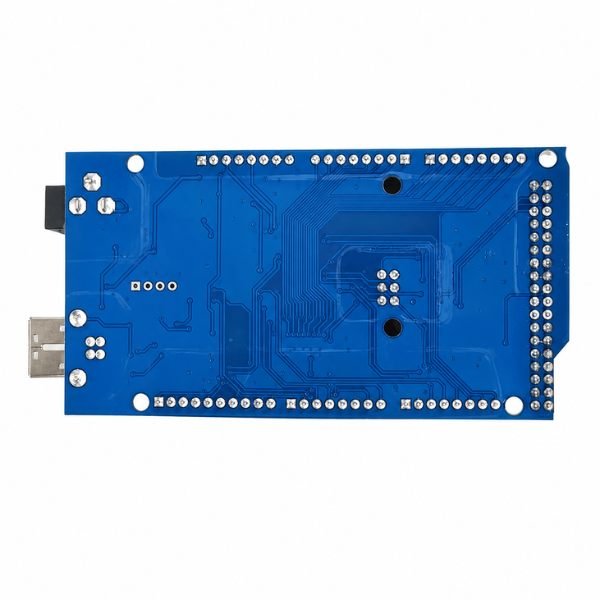
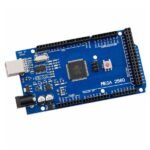
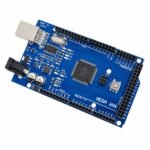
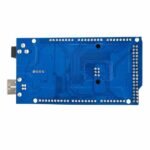



The Arduino MEGA 2560 CH340 R3 Compatible Board is a large-format microcontroller board built around the ATmega2560 running at 16MHz with 54 digital I/O pins, 16 analog inputs, 15 PWM outputs, 256KB flash, 8KB SRAM, and 4KB EEPROM. The arduino mega 2560 ch340 variant uses the CH340 USB-to-serial chip instead of the original ATmega16U2 found on official boards, enabling full Arduino IDE compatibility on Windows, macOS, and Linux with a one-time CH340 driver installation. Operating at 5V with a recommended 7V to 12V input supply, the board accepts inputs up to 20V at the absolute limit.
The arduino mega 2560 r3 ch340 board is the standard platform for CNC machine shields, RAMPS 1.4 3D printer controller boards, and multi-axis robotics projects where the I/O count of smaller Arduino boards becomes the limiting factor. Four hardware UART ports allow simultaneous serial communication with GPS modules, GSM modems, Bluetooth adapters, and debug terminals in a single project without software serial workarounds. The arduino mega 2560 pinout exposes all 54 digital pins along the board edges, with each pin rated at 40mA DC current and the 3.3V pin rated at 50mA maximum.
One trade-off: the CH340 chip requires a separate driver installation on newer versions of Windows and macOS — the board will not appear as a COM port until the CH340 driver is installed. The non-obvious detail from the arduino mega 2560 datasheet is that 8KB of the 256KB flash is reserved for the bootloader, leaving 248KB available for sketch storage — still far exceeding what any Arduino Uno or Nano variant offers. The arduino mega price to memory ratio makes this the most cost-effective high-pin-count Arduino board available for college and hobbyist projects in India. StemVolt provides this arduino board for learner’s working on IoT projects, robotics, and smart automation systems.
Related Products:
-
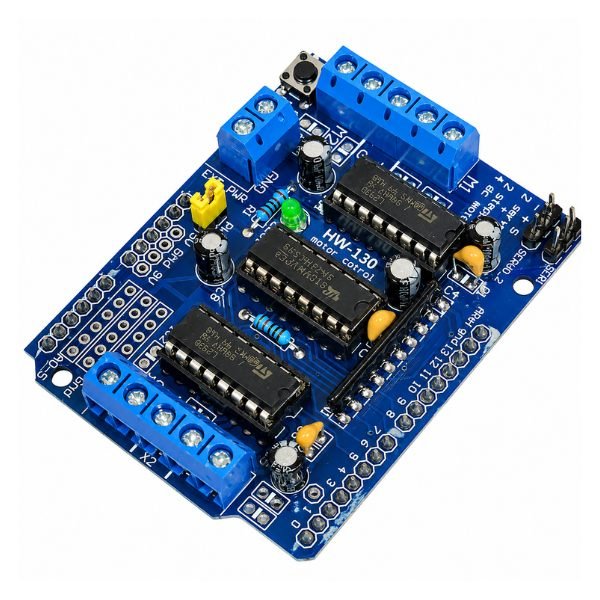
Checkout the Arduino Mega 2560 R3 Sensor Shield V2.0 for Arduino projects
-
Explore the IR and Ultrasonic Sensors for build smart robotics projects
- 54 digital I/O pins cover all large-scale peripheral and sensor connections
- 256KB flash stores complete firmware with bootloader and library overhead
- Four hardware UART ports support simultaneous multiple serial device communication
- CH340 USB chip supports Arduino IDE on Windows macOS and Linux
- 4KB EEPROM retains settings and calibration data through power cycles
Technical Specifications:
| Specification | Details |
|---|---|
| Microcontroller | ATmega2560 |
| Clock Speed | 16 MHz |
| Operating Voltage | 5 V |
| Input Voltage (Recommended) | 7 V – 12 V |
| Input Voltage (Limit) | 6 V – 20 V |
| Digital I/O Pins | 54 (15 PWM) |
| Analog Input Pins | 16 |
| Flash Memory | 256 KB (8 KB Bootloader) |
| SRAM | 8 KB |
| EEPROM | 4 KB |
| USB Interface Chip | CH340 USB-to-Serial |
| IDE Compatibility | Arduino IDE (Windows / macOS / Linux) |
Applications:
- Arduino MEGA 2560 CH340 R3 Board used with RAMPS 1.4 3D printer shield
- CNC machine uses arduino mega 2560 ch340 r3 with GRBL CNC shield
- Robotics arm uses arduino mega 2560 r3 ch340 board for multi-servo control
- Multi-sensor weather station uses 16 analog inputs for full ADC channel logging
- College final year project uses arduino mega 2560 pinout for industrial demo
Package Includes:
-
1 × Arduino MEGA 2560 CH340 R3 Compatible Board

Abhay Srivastava –
Received this Arduino compatible board from a trusted robotics shop, all ports worked properly and programming was hassle free.
Anil Kulkarni –
Delivered in 3 days with safe packaging, board quality feels genuine and technical support available team helped with setup questions.
Pooja Rathod –
Reliable Arduino Mega board
Harmeet Singh –
Bought from a reliable electronics store for an ATL lab project, performance is excellent and COD available option made purchasing very convenient.
Sandeep Khatri –
USB interface provides reliable programming and smooth connectivity during Arduino development work
Nikhil Chawla –
Powerful microcontroller for large-scale projects with stable performance and multiple I/O support
Rakesh Dwivedi –
Genuine quality board
Gayatri Deshpande –
Perfect for ATL projects